




Chocolate of the Future? Big Players Are Investing Billions in "Lab-Grown" Cocoa

The price of chocolate has risen rapidly in recent years, turning this sweet treat into what is literally becoming a "luxury good." This is the result of climate change, drought, and related diseases that threaten cacao trees on plantations and cause production shortfalls, as well as a lack of investment. However, it seems that researchers have found an answer to this problem in the form of cocoa grown directly in laboratories.
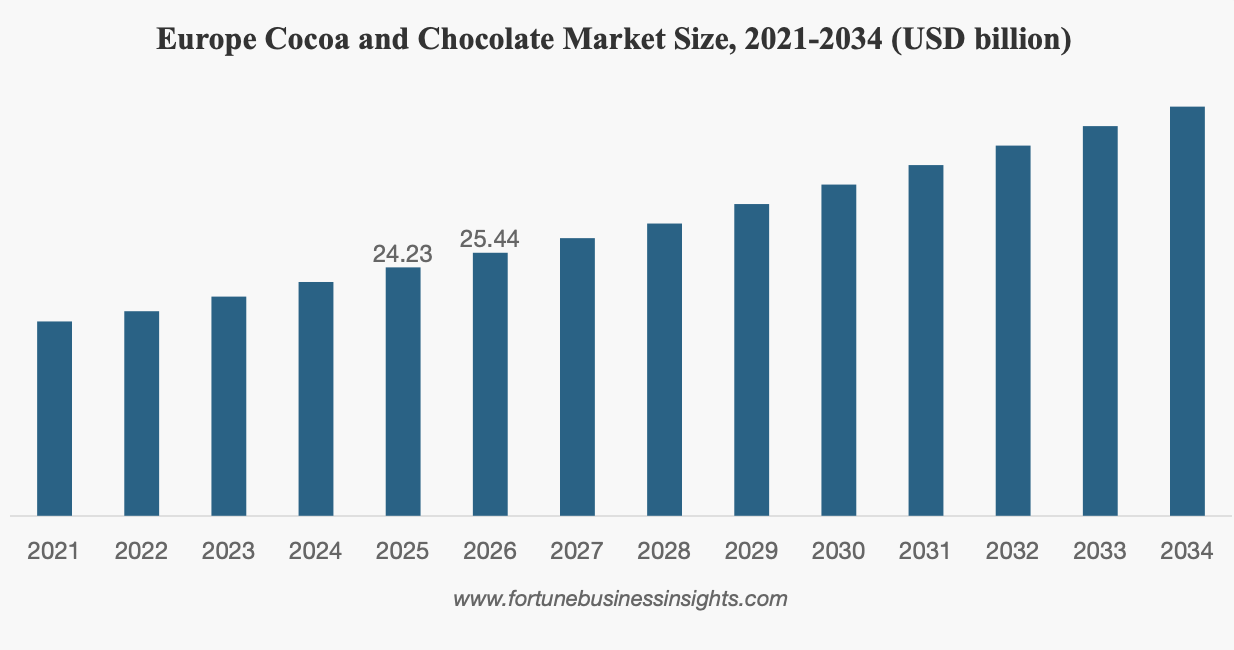
Cocoa is one of the most strategic commodities since it is used in chocolates and a wide range of other confections, but the aforementioned problems complicate its cultivation. According to data from The Guardian, more than 7 million metric tons of cocoa are consumed globally each year. As reported by Fortune Business Insights, the global chocolate and cocoa market was valued at USD 55.87 billion in 2025, with expected growth to USD 86.52 billion by 2034. Major market players are therefore investing enormous financial resources into the research and development of lab-grown cocoa. [1]

Prominent Brands Involved

Among the most well-known, we can mention Hershey, the manufacturer of the legendary Reese’s, which invested USD 20 million into a biotech company producing lab-grown cocoa. Lindt invested 5.6 million, Mondelēz International—the company behind treats like Oreo and Toblerone—allocated 4.6 million from its budget, and the Kinder brand, which falls under the Ferrero Group, contributed 15 million. The highest investments came from KitKat at 44 million, M&M’s with up to 1.4 billion, and the confectionery manufacturer Mars, which invested a staggering USD 2 billion.
Snímka obrazovky 2026-06-04 o 16.46.36

Projected growth of the European cocoa and chocolate market from 2021 to 2034. *[1]

Original or "Fake"?

Following lab-grown meat, which resonated globally a while ago, information about similarly grown cocoa is now coming to the forefront. This naturally raises many questions and concerns, which, according to available information, are unfounded. Cocoa created in laboratory conditions actually originates from cells taken directly from a cacao bean; thus, it is cocoa grown from real fruit cells. It simply does not originate through traditional agriculture, but through cultivation in a controlled laboratory environment. Scientists are also experimenting with manufacturing chocolate from cacao husks, which are typically discarded during conventional chocolate production.

Available as Early as 2027

Israeli startups such as Kokoom and Celleste Bio, along with a number of other companies worldwide, are currently working on lab-grown cocoa. This includes California Cultured, which is still waiting for approval from the Food and Drug Administration (FDA) to launch its chocolate on the market. Despite various rumors circulating that companies are already adding this chocolate to their products, it is not yet commercially available, and products made from this cocoa are tentatively expected to hit store shelves in 2027.

The Ecological Aspect

Cacao trees are often cultivated on deforested land, which degrades soil quality and requires heavy doses of fertilizers and pesticides, meaning lab-grown chocolate could also benefit the environment. However, Sophia Carodenuto, a political geographer specializing in global food systems at the University of Victoria, pointed out the downside of laboratory commodity production in an article for The Guardian: namely, the negative impact on smallholder farmers in West Africa who depend on cacao cultivation and sales for their livelihood. On the other hand, Shirley Temeng-Asomaning, founder and CEO of Chocolate Mall in Ghana, hopes that science will complement farmers rather than compete with them. Given the continuous growth in demand, this latter scenario seems more likely...

Current Market Price Trends

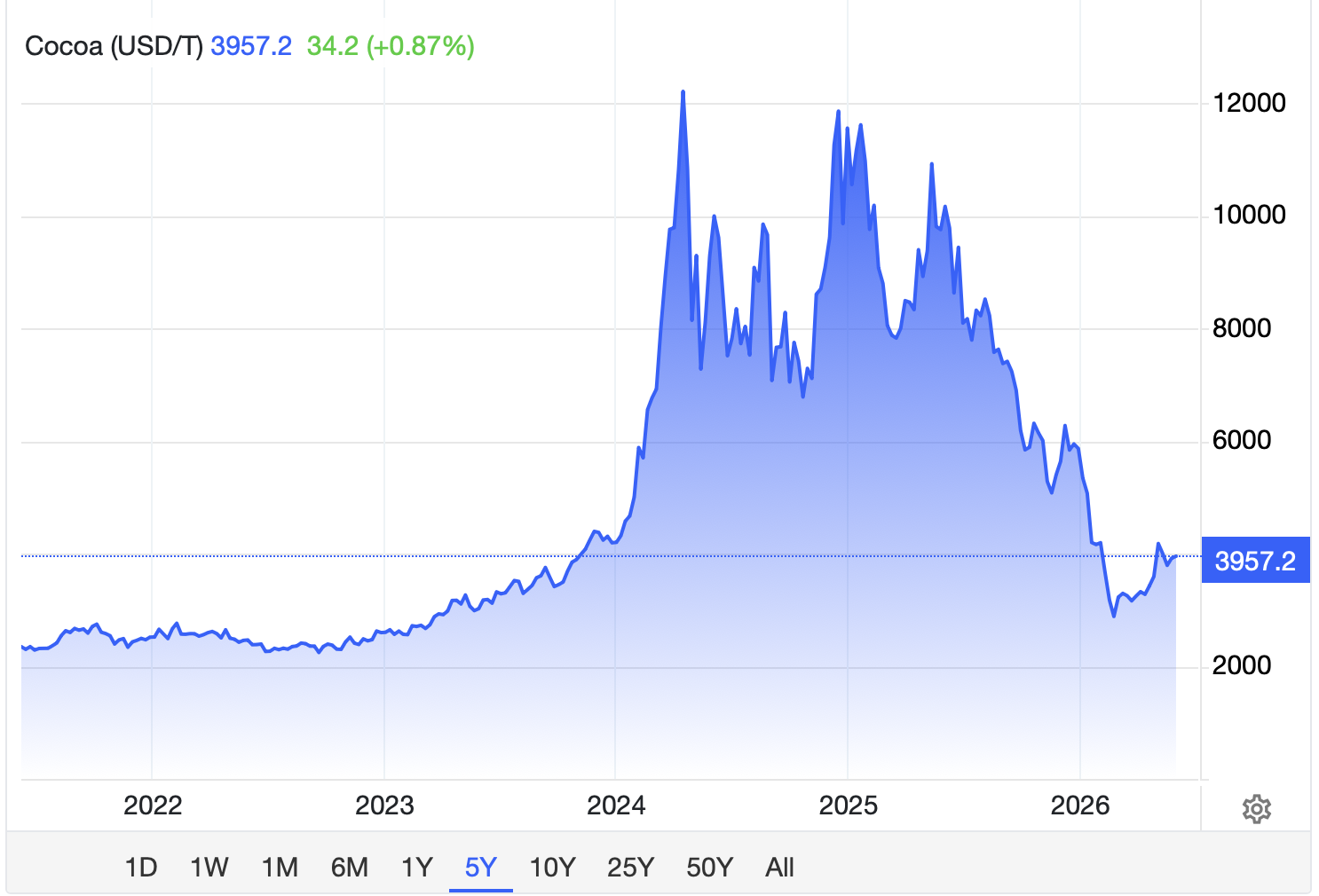
Cocoa prices on the stock exchange reached historic highs in 2024, peaking at USD 12,000 per metric ton. For comparison, at the beginning of June 2026, cocoa futures are trading at around USD 4,000 per ton. Attention is currently focused on the El Niño phenomenon, which could damage harvests in Ghana and the Ivory Coast, countries that account for more than 60 percent of global production. At the same time, prospects for a price recovery in the 2025/2026 season and data on ICE cocoa inventories—which rose to a near two-year high (2,846,957 bags) by May 29—are limiting further price growth for the commodity. *
Snímka obrazovky 2026-06-04 o 14.31.39

Trend of the cocoa futures contract value over the last 5 years. (Source: TradingEconomics) *

* Past performance is not a guarantee of future results.

[1] Forward-looking statements are based on assumptions and current expectations that may prove inaccurate, or on the current economic environment, which may change. Such statements are not guarantees of future performance. They involve risks and other uncertainties that are difficult to predict. Actual results may differ materially from those expressed or implied in any forward-looking statements.

Photo:Pixabay

This text constitutes marketing communication. It is not any form of investment advice or investment research or an offer for any transactions in financial instrument. Its content does not take into consideration individual circumstances of the readers, their experience or financial situation. The past performance is not a guarantee or prediction of future results.

🍪 Slapukai

Mes naudojame slapukus, kad galėtume saugoti, naudoti ir tvarkyti asmens duomenis, siekdami užtikrinti Jums geriausią interneto patirtį. Spausdami „Sutinku su slapukais“ Jūs sutinkate, kad būtų saugomi visi slapukai, ir užtikrinate geriausi Galite keisti slapukų nustatymus arba atšaukti sutikimą spustelėdami „Slapukų nustatymai“. Norėdami sužinoti daugiau apie slapukus ir jų tikslus, perskaitykite mūsų Slapukų politiką ir Privatumo pranešimą.

Cookies settings


Slapukų kontrolė

Kas yra slapukai?

Slapukai yra nedideli tekstiniai failai, kurie leidžia mums ir mūsų paslaugų teikėjams unikaliai identifikuoti jūsų naršyklę ar įrenginį. Slapukai paprastai veikia priskirdami jūsų įrenginiui unikalų numerį ir yra saugomi jūsų naršyklėje jūsų lankomų svetainių bei tų svetainių trečiųjų šalių paslaugų teikėjų. Terminas „slapukai“ apima ir kitas technologijas, pvz., SDK, pikselius ir vietinę saugyklą.


Jei įjungta

Mes galime atpažinti jus kaip klientą, o tai leidžia teikti individualizuotas paslaugas, turinį ir reklamą, užtikrinti paslaugų veiksmingumą ir atpažinti įrenginį, kad būtų užtikrintas didesnis saugumas. Mes galime pagerinti jūsų patirtį remdamiesi jūsų ankstesne sesija. Mes galime stebėti jūsų pageidavimus ir individualizuoti paslaugas.
Mes galime pagerinti svetainės veikimą.


Jei išjungta

Mes negalėsime prisiminti jūsų ankstesnių sesijų, todėl negalėsime pritaikyti svetainės pagal jūsų pageidavimus.
Be slapukų kai kurios funkcijos gali būti neprieinamos, o vartotojo patirtis gali pablogėti.


„Būtinai reikalingi“ reiškia, kad be jų negalima užtikrinti pagrindinių svetainės funkcijų. Kadangi šie slapukai yra būtini tinkamam svetainės funkcijų ir paslaugų veikimui bei saugumui užtikrinti, jūs negalite atsisakyti naudoti šias technologijas. Jūs vis tiek galite juos užblokuoti savo naršyklėje, tačiau tai gali sutrikdyti pagrindinių svetainės funkcijų veikimą.

  • Privatumo nustatymų konfigūravimas
  • Saugus prisijungimas
  • Saugus ryšys naudojantis paslaugomis
  • Formų pildymas

Analizės ir veiklos stebėjimo technologijos, skirtos analizuoti, kaip naudojatės Svetainę.

  • Dažniausiai peržiūrimos puslapiai
  • Sąveika su turiniu
  • Klaidų analizė
  • Įvairių projektų efektyvumo testavimas ir matavimas

Svetainė gali naudoti trečiųjų šalių reklamos ir rinkodaros technologijas.

  • Reklamuokite mūsų paslaugas kitose platformose ir svetainėse
  • Įvertinkite mūsų kampanijų veiksmingumą

Rizikos įspėjimas: CFD yra sudėtingi instrumentai ir dėl sverto jie kelia didelę riziką greitai prarasti pinigus. 78.70% mažmeninių investuotojų sąskaitų praranda pinigus prekiaudami CFD su šiuo teikėju. Turėtumėte apsvarstyti, ar suprantate, kaip veikia CFD, ir ar galite sau leisti prisiimti didelę riziką prarasti savo pinigus.