









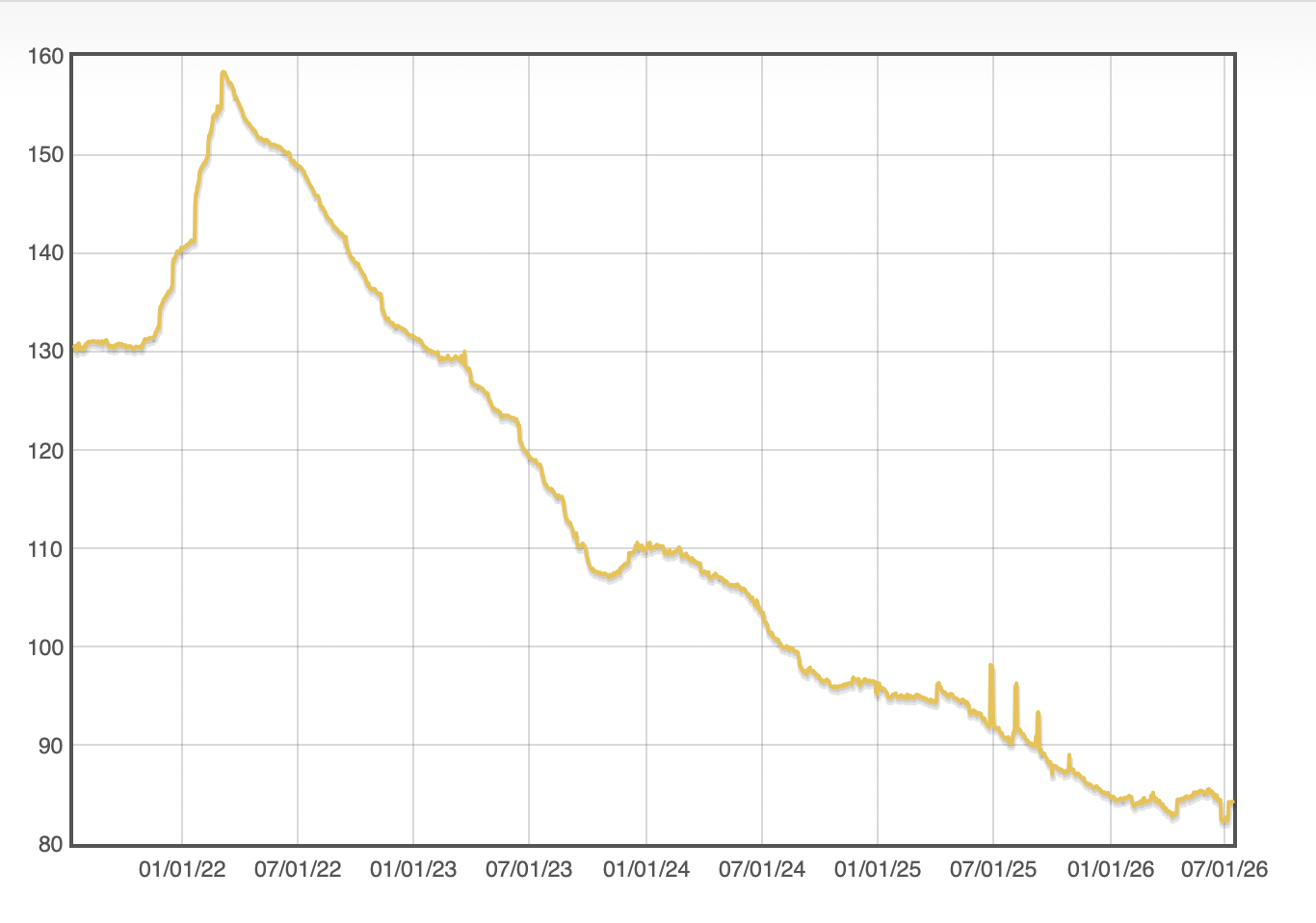
Performance of the IDEX Diamond Index over the past five years. * (Source: Idexonline.com)
Lab-Grown Diamonds Are Significantly More Affordable
The most important factor behind the decline in natural diamond prices is the rapid rise of lab-grown diamonds (LGDs). These gemstones possess the same chemical and physical properties as natural diamonds, but their production costs are substantially lower and continue to decline each year thanks to technological advancements. According to data published by Forbes in March 2025, retail prices of lab-grown diamonds had fallen by more than 80–90% compared to their natural counterparts. By comparison, just eleven years ago, lab-grown diamonds were priced only about 10% below natural diamonds. As a result, natural diamonds are facing significant pricing pressure, particularly in the segment of smaller, commercially available stones.
Market Share Continues to Grow
While lab-grown diamonds (LGDs) accounted for only around 1% of all diamond sales in 2015, their market share had increased to approximately 20% by 2024. According to data from the wedding platform The Knot, the figure is even higher in the engagement ring segment. In 2024, lab-grown diamonds represented 52% of all center stones in engagement rings sold in the United States. Looking at broader market data, the global lab-grown diamond market reached USD 29.46 billion in 2025. According to Fortune Business Insights, it is expected to exceed USD 33 billion in 2026 and has the potential to grow to more than USD 91 billion by 2034.
Weaker Global Demand
Following the pandemic, the industry expected a strong rebound in consumer demand for diamonds. Instead, it was confronted with a slowdown in the Chinese economy, higher interest rates, and rising living costs. Consumers are increasingly comparing prices, product origins, and actual value before making purchasing decisions. The perception of diamonds has also changed significantly. A segment once associated with exclusivity is gradually losing part of its appeal. In the past, diamonds were synonymous with luxury, and many women dreamed of receiving a Tiffany engagement ring. Today, however, even Walmart offers a 5-carat lab-grown diamond ring set in 14-karat gold. The price? Approximately USD 2,990. The widespread availability of lab-grown diamonds through retail chains such as Walmart is fundamentally reshaping public perception. Diamonds are becoming widely affordable and are gradually losing their status as a premium luxury product.
Excess Inventory
The challenges facing the diamond industry are also highlighted in the documentary Nothing Lasts Forever, which exposed several controversial issues. Among them were cases in which lab-grown diamonds were allegedly mixed with natural stones without proper disclosure, as well as claims that De Beers spent decades creating the perception of diamond scarcity by controlling supply. In addition, mining companies continued producing volumes that today's market can no longer absorb. The result is a substantial inventory of unsold diamonds, putting further downward pressure on prices. According to Mining.com.au, global diamond inventories reached 1.7 billion carats as of February 2026. Russia, the world's largest diamond producer, holds approximately 44% of these inventories.
Diamonds Are No Longer a Universal Investment
In the past, it was widely believed that diamonds naturally preserved or even increased in value over time. Current market developments, however, show that such a claim can no longer be generalized. The diamond market is less liquid than gold or exchange-traded financial assets, and the secondary market has become far more selective. The sharpest price declines have affected standard commercial-grade diamonds, while high-quality natural stones with exceptional clarity, large carat weights, or rare colors have remained relatively resilient.
A Gradually Polarizing Market
Despite the overall decline in prices, the diamond market is increasingly splitting into two distinct segments. The first consists of commercial-grade diamonds, whose prices are under significant pressure from the growing competition posed by lab-grown alternatives. The second comprises exceptional natural diamonds—large stones, rare colored diamonds, and diamonds with a unique origin or strong investment potential. These assets continue to attract collectors, investors, and leading auction houses.
Major Industry Players Are Changing Their Strategy
Leading industry players, including De Beers and the Natural Diamond Council, are adjusting their strategies. Rather than emphasizing the rarity of natural diamonds alone, they are shifting their communication toward storytelling, provenance, authenticity, and emotional value. At the same time, new initiatives are emerging to more clearly distinguish natural diamonds from lab-grown products. At the beginning of 2026, De Beers even reduced the prices of its natural diamonds in an effort to stimulate demand.
A New Era for the Diamond Industry
In my opinion, the current developments in the diamond market can be viewed as a natural evolution of the industry. The diamond sector is entering a new phase. The expansion of lab-grown diamond production, changing consumer preferences, and broader economic factors are creating an environment in which simply owning a diamond no longer automatically guarantees the preservation of its value. Lab-grown diamonds will continue to appeal primarily to consumers who prioritize affordability and environmental considerations. By contrast, future value is likely to be concentrated in exceptional natural diamonds with well-documented provenance, internationally recognized certification, and limited supply. For investors, the ability to distinguish between a mass-produced product and a genuinely rare asset will become increasingly important. This distinction is likely to be one of the key factors determining investment success in the years ahead.
*Past performance is not a guarantee of future results.
Photo: Pixabay
