




Google Wins Key Court Case: Chrome and Android Remain in the Company’s Hands

In 2023, a closely watched legal battle began between Google and the U.S. Department of Justice (DOJ), which demanded unprecedented measures. At stake was even the forced sale of the flagship Chrome browser, an indispensable pillar of the online ecosystem. For Alphabet, this would have meant a major blow to its business model and a real threat to its dominant position. On the second day of September, however, came a moment that many on Wall Street call groundbreaking.

Details of the Verdict

U.S. District Judge Amit Mehta ruled that Google does not have to divest Chrome or the Android OS. While the final ruling prohibits exclusive contracts, conditional payments, or licensing, Google can still continue paying companies to have its products pre-installed. This ruling also largely concerns Apple. In practice, this means that Google is authorized to continue billion-dollar payments to keep Chrome as the default search engine on iPhones.

Record on the Stock Market

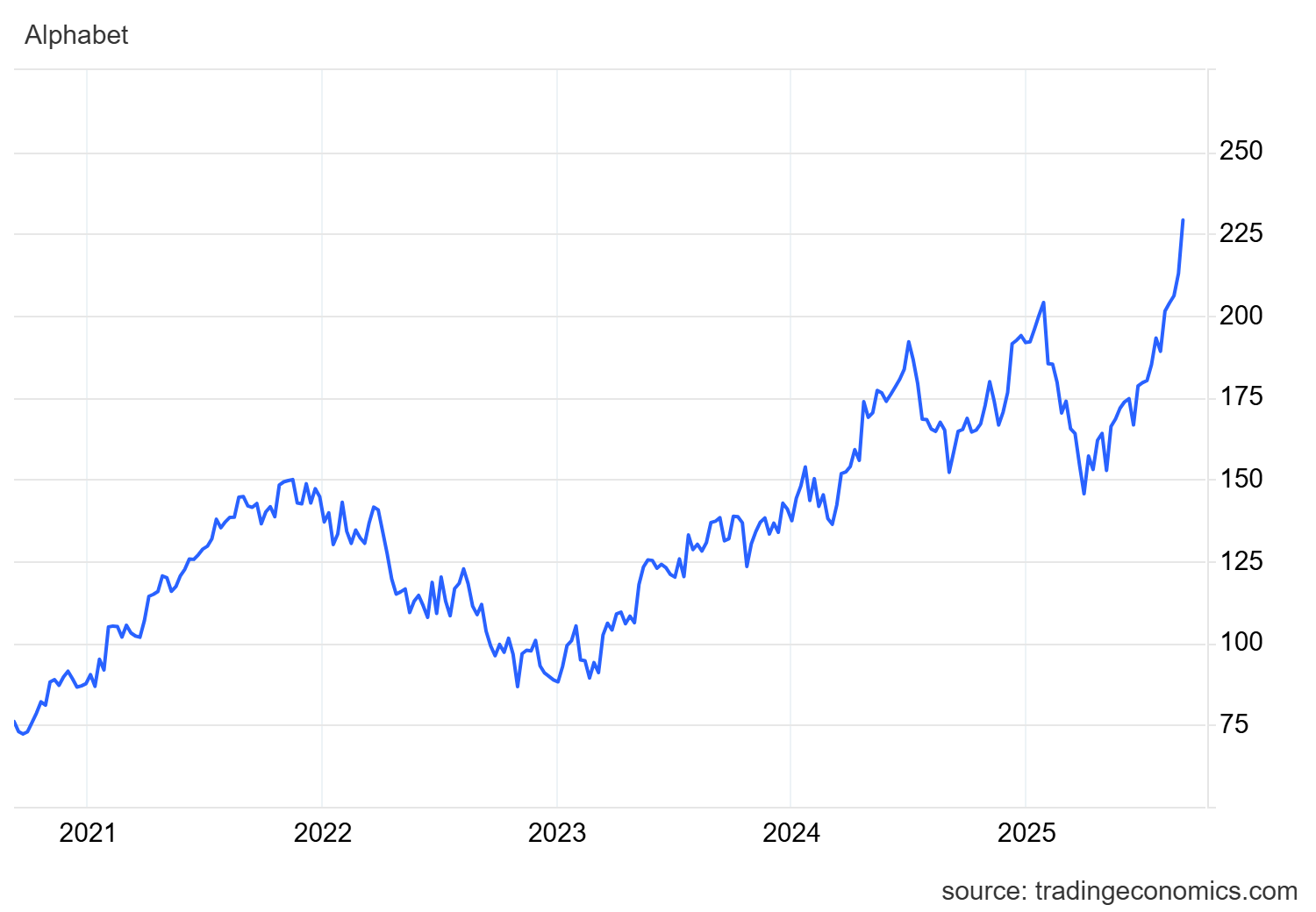
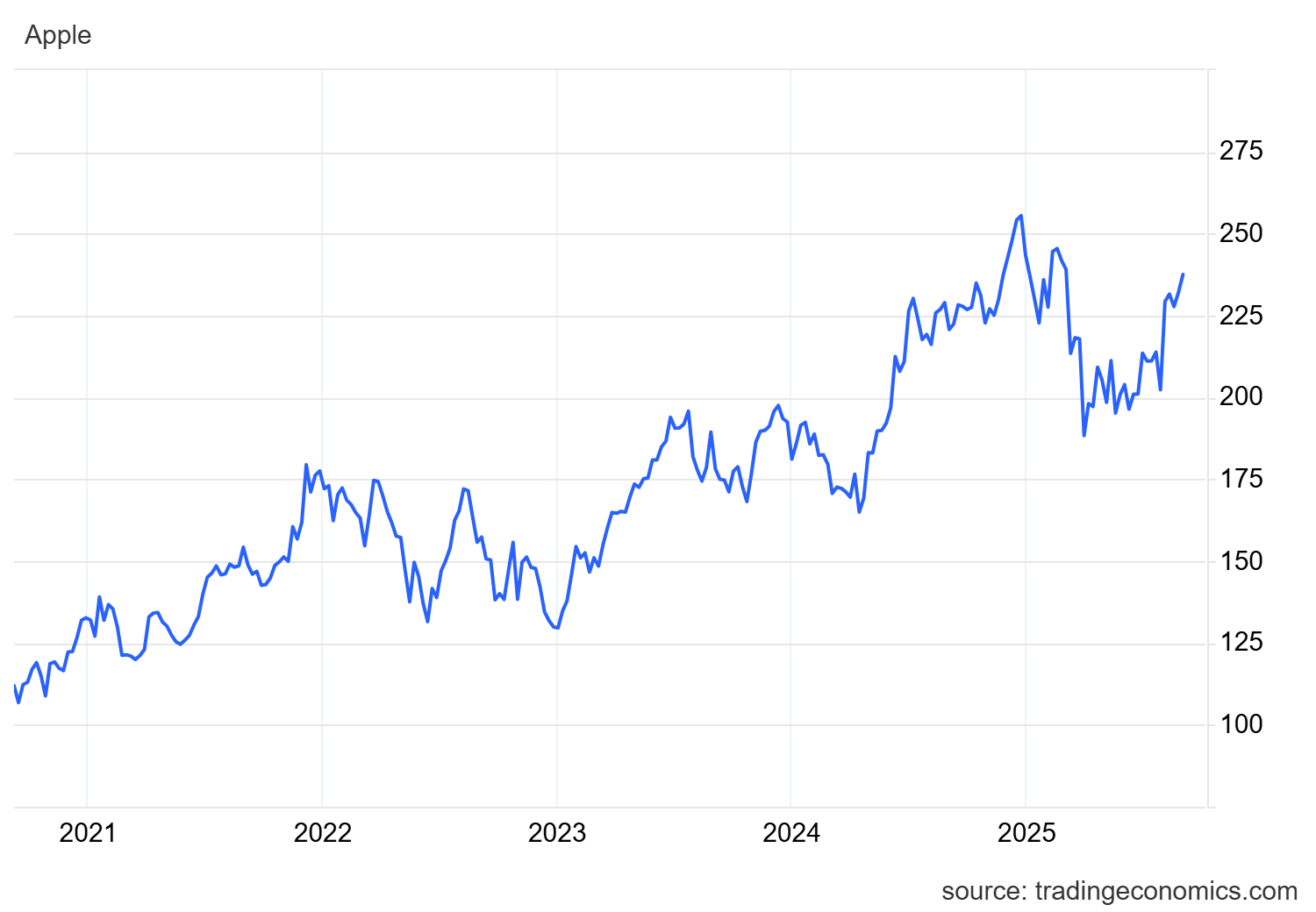
The reaction of Alphabet’s share price on the stock market did not take long. After Wednesday’s market close, the price settled at $231.10, representing an increase of more than 9 percent, which directly boosted market capitalization by a substantial $234 billion. As mentioned earlier, the legislative ruling also applies to Apple, which resonated with the company’s share price as well. Although Apple’s growth was somewhat milder, 3.81 percent, even this figure was enough to raise Apple’s market capitalization by $130 billion.*
goog_us

Performance of Google’s Share Price Over the Past Five Years*
aapl_us

Performance of Apple’s Share Price Over the Past Five Years*

Why Is This So Important?

The origins of the court proceedings date back to 2023, when Google was found guilty of maintaining an illegal monopoly in internet search. Had the latest hearings accepted all of the DOJ’s proposals, Alphabet would have faced a historic transformation that, in my view, would have significantly complicated the situation for this giant. Investors view the ruling just as positively, because the company can continue with its current business model, in which the advertising segment contributes the majority share, the latest quarterly results showed that out of total revenue of $96.43 billion, the advertising segment accounted for as much as $71.34 billion.

Strategic Future

Continuing with the positive aspects, the ruling also opened the door to deeper cooperation between Android and Google’s plans in the field of artificial intelligence. The system, which powers roughly 70% of smartphones worldwide, is becoming a natural gateway for the expansion of Gemini – a family of AI models and chatbots on which Google is building its future.

Conclusion

The monopoly storm thus passed for Google without dramatic intervention, which means for investors that the company once again has freer hands for expansion and adaptation in the race for leadership in the era of artificial intelligence. Moreover, the share price immediately confirmed this assumption, rising to a new all-time high – something investors undoubtedly welcomed.

* Past performance is not a guarantee of future results

This text constitutes marketing communication. It is not any form of investment advice or investment research or an offer for any transactions in financial instrument. Its content does not take into consideration individual circumstances of the readers, their experience or financial situation. The past performance is not a guarantee or prediction of future results.

🍪 Cookies

We use cookies to store, access and process personal data to give you the best online experience. By clicking Accept Cookies you consent to storing all cookies and ensure best website performance. You can modify cookie preferences or withdraw consent by clicking Cookie Settings. To find out more about cookies and purposes, read our Cookie Policy and Privacy Notice.

Cookies settings


Cookie Control

What are cookies?

Cookies are small text files that enable us, and our service provides to uniquely identify your browser or device. Cookies normally work by assigning a unique number to your device and are stored on your browser by the websites that you visit as well as third-party service providers for those website. By the term cookies other technologies as SDKs, pixels and local storage are to be considered.


If Enabled

We may recognize you as a customer which enables customized services, content and advertising, services effectiveness and device recognition for enhanced security
We may improve your experience based on your previous session
We can keep track of your preferences and personalize services
We can improve the performance of Website.


If Disabled

We won't be able to remember your previous sessions, that won't allow us to tailor the website according to your preferences
Some features might not be available and user experience reduced without cookies


Strictly necessary means that essential functions of the Website can not be provided without using them. Because these cookies are essential for the properly working and secure of Website features and services, you cannot opt-out of using these technologies. You can still block them within your browser, but it might cause the disfunction of basic website features.

  • Setting privacy preferences
  • Secure log in
  • Secure connection during the usage of services
  • Filling forms

Analytics and performance tracking technologies to analyze how you use the Website.

  • Most viewed pages
  • Interaction with content
  • Error analysis
  • Testing and Measuring various design effectivity

The Website may use third-party advertising and marketing technologies.

  • Promote our services on other platforms and websites
  • Measure the effectiveness of our campaigns

Risk warning: CFDs are complex instruments and come with a high risk of losing money rapidly due to leverage. 71.96% of retail investor accounts lose money when trading CFDs with this provider. You should consider whether you understand how CFDs work and whether you can afford to take the high risk of losing your money.